The Last Ghumto Weavers of Sikles: Preserving a Fading Himalayan Textile Tradition
In the mountain village of Sikles, traditional weaving represents more than a craft—it reflects generations of knowledge, cultural identity, and community life. As changing lifestyles challenge the continuity of handmade textiles, the story of Ghumto weaving raises important questions about safeguarding Nepal's living heritage for future generations.
A Tradition Woven Into Mountain Life
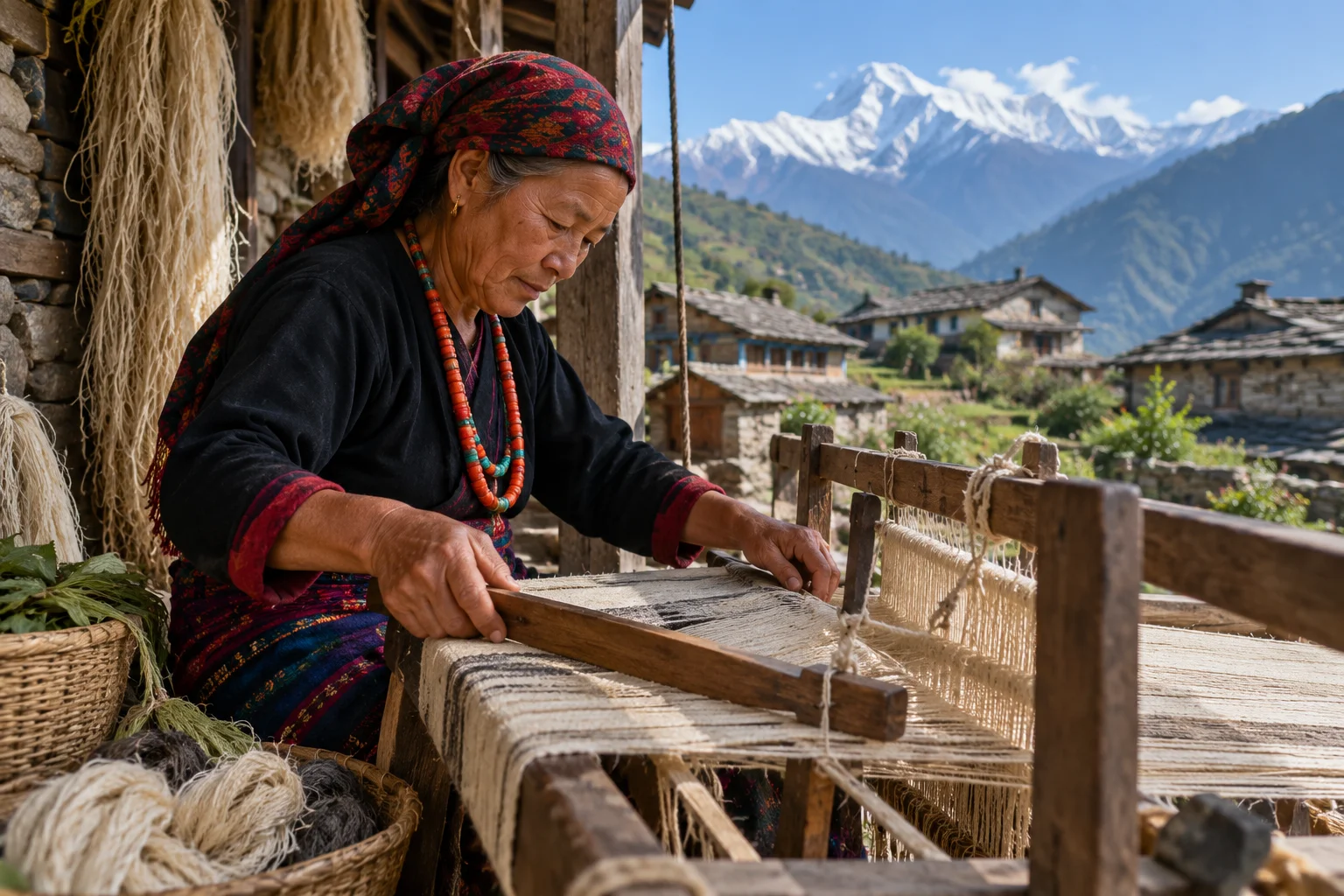
High in the hills of Nepal, the village of Sikles is known for its Gurung cultural heritage, traditional settlements, and close relationship with the surrounding Himalayan landscape. Beyond its scenic beauty, the village offers an important perspective on the knowledge and craftsmanship that have shaped rural communities for generations.
Among the traditions deserving closer documentation is the weaving of Ghumto, a textile tradition whose local history, techniques, and contemporary practice require careful study.
Traditional textiles are more than everyday materials. They can carry stories of family life, community identity, local resources, and the skills passed from one generation to another.
Every woven piece represents a combination of patience, practical knowledge, and cultural experience. Understanding such craftsmanship means looking beyond the finished fabric to the people, processes, and traditions behind its creation.
The Cultural Meaning of Traditional Weaving
For generations, weaving has played an important role in the domestic and cultural life of many Himalayan communities.
Textile-making practices often reflect the relationship between people and their environment. The selection of fibres, preparation of materials, weaving techniques, and use of finished textiles can reveal how communities adapt to their surroundings and maintain their cultural identities.
In Gurung communities, traditional clothing and textiles are closely connected with cultural expression. Their meanings, however, can vary according to locality, occasion, family practices, and historical circumstances.
Documenting Ghumto weaving in Sikles therefore requires more than identifying a particular textile. It involves understanding its local name, traditional uses, materials, techniques, and significance from the perspectives of community members themselves.
Such knowledge is particularly valuable because cultural heritage is not always preserved in written records. Much of it survives through everyday practice, observation, memory, and oral communication.
The Knowledge Behind Every Thread
Traditional weaving demands a combination of technical ability, experience, and attention to detail.
Depending on the textile and local practice, the process may involve preparing fibres, arranging threads, operating weaving equipment, developing patterns, and finishing the completed fabric.
These skills are often acquired through years of observation and practical learning rather than formal instruction.
An experienced craftsperson may understand how different materials behave, how to maintain consistency in the weave, and how to recognise problems through touch and observation.
Such knowledge is difficult to capture through photographs alone.
A meaningful record of Ghumto weaving should therefore document not only the finished textile but also the complete process, the tools used, the terminology associated with the craft, and the experiences of the people who practise it.
Changing Lifestyles and the Future of Handmade Textiles
Across Nepal, traditional crafts face challenges associated with economic change, migration, evolving consumer preferences, and the availability of factory-produced alternatives.
Handmade textiles often require substantial time and labour. At the same time, younger generations may have fewer opportunities or incentives to learn specialised craft skills.
These broader changes raise important questions about the future of traditional weaving in villages such as Sikles.
However, it is essential not to assume that a craft has disappeared or that its remaining practitioners are the last without reliable community-based evidence.
A proper assessment should examine whether weaving is still practised, how skills are transmitted, whether traditional materials remain accessible, and what local artisans identify as their most significant challenges.
The voices of the craftspeople themselves must remain central to this discussion.
Why the Stories of Weavers Matter
A textile can be preserved in a museum collection, but the knowledge required to produce it may disappear if it is not documented and shared.
The experiences of traditional weavers provide valuable information about cultural practices that may otherwise receive little attention in official historical records.
Their memories can help explain how techniques were learned, how textiles were used in community life, and how weaving practices have changed over time.
Oral history interviews, photographs, audio recordings, and video documentation can help preserve this information.
Equally important is recording local terminology and understanding the cultural meanings associated with particular objects and techniques.
This approach recognises traditional craftspeople not simply as producers of objects but as knowledge holders whose expertise contributes to the understanding of Nepal's cultural history.
The Role of Museums in Safeguarding Living Heritage
Museums have an important responsibility to document both tangible and intangible cultural heritage.
Traditional textiles represent tangible heritage through their physical materials, patterns, and craftsmanship. The knowledge, skills, expressions, and practices associated with their production form part of living cultural heritage.
For institutions such as Dudhpokhari Museum, documenting regional textile traditions offers an opportunity to connect material culture with the experiences of the communities that sustain it.
Responsible museum documentation may include recording the origin and use of textiles, identifying materials and techniques, interviewing artisans, and preserving photographs and audiovisual records.
Such work should be undertaken with community participation, appropriate consent, and respect for local ownership of cultural knowledge.
Museums can also support educational activities that introduce younger generations to traditional crafts and encourage dialogue between experienced practitioners and new learners.
The objective should not be to treat living traditions as objects belonging only to the past, but to recognise their continuing relevance in contemporary society.
Preserving Skills, Not Just Objects
The preservation of traditional weaving requires more than collecting finished textiles.
A fabric stored in a museum can demonstrate the appearance and material characteristics of a craft, but it cannot independently explain every decision, movement, or technique involved in its creation.
Safeguarding living heritage also means creating opportunities for knowledge transmission.
Community workshops, apprenticeship initiatives, educational programmes, and carefully prepared digital archives can contribute to this process when they respond to the interests and needs of local practitioners.
Documentation should also recognise that traditions naturally change. New materials, designs, and methods do not automatically make a craft less culturally meaningful.
The challenge is to ensure that communities retain the knowledge and freedom necessary to understand, practise, and reinterpret their heritage.
A Shared Responsibility for the Future
The story of Ghumto weaving in Sikles invites a broader conversation about the future of traditional craftsmanship in Nepal.
It reminds us that cultural heritage is not limited to monuments, archaeological objects, or historic buildings. Heritage also exists in the skills people practise, the knowledge they share, and the meanings they attach to everyday objects.
Protecting such traditions requires cooperation among artisans, families, community organisations, researchers, educational institutions, and museums.
For Dudhpokhari Museum, the documentation of weaving traditions can form part of a wider commitment to understanding the cultural diversity of Nepal's mountain communities.
Before describing any weavers as the last of their tradition, their stories deserve to be heard, their practices carefully documented, and their knowledge recognised on its own terms.
The future of traditional weaving depends not only on preserving what earlier generations created, but also on respecting and supporting the people who continue to carry that knowledge forward.